
by liberal japonicus
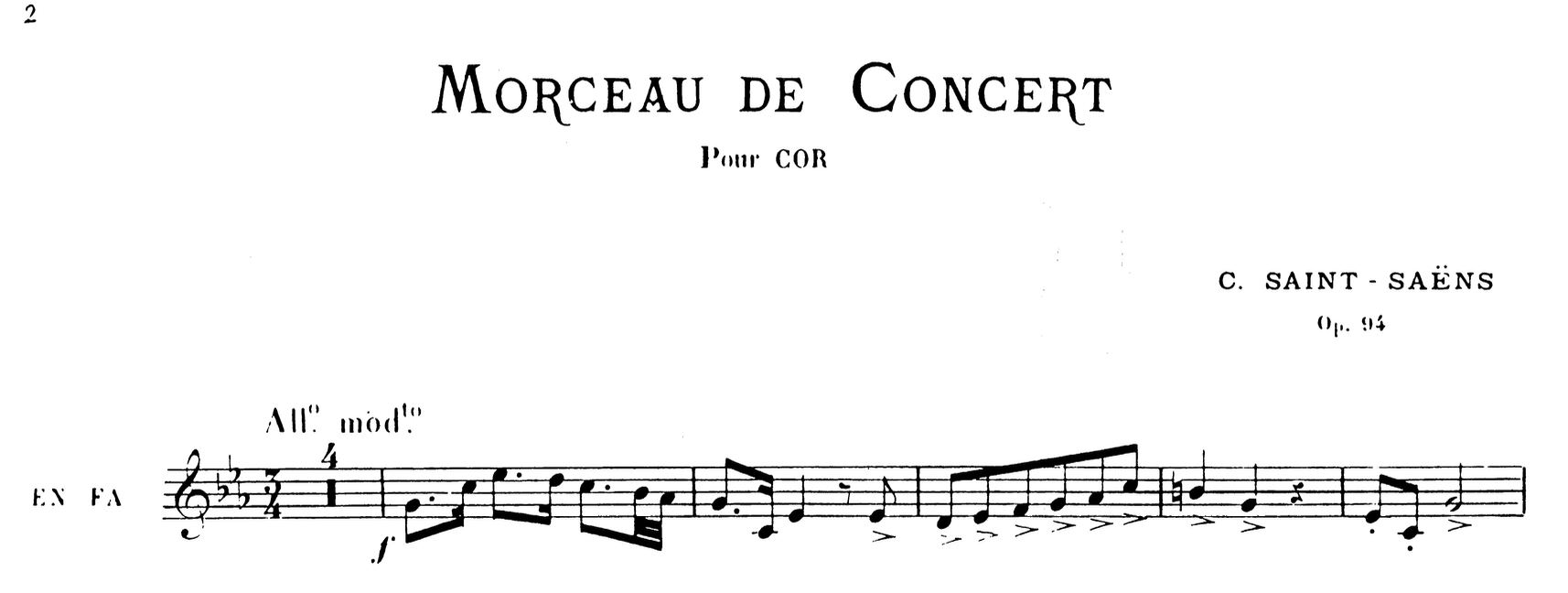
Trying to post little bits for the next month or so to keep the blog going, and I thought of morceau, which is cognate with the English word morsel, and I thought about Saint-Saëns’ horn composition Morceau de concert, which you can enjoy from the youtube video at the bottom where Anneke Scott is playing the piec on a period instrument
But the morceau that I was thinking about was a facebook exchange with Russell where he asked ‘what is so bad about being autistic’ and I noted that that given Kennedy’s rant that autistic people would “never pay taxes, they’ll never hold a job, they’ll never play baseball, they’ll never write a poem, they’ll never go out on a date. Many of them will never use a toilet unassisted,” he was stuck on the older definition of autistic and didn’t seem to be aware that autism is so it is pretty clear he’s not watched all these shows with an autistic genius type.The Gemini summary is below
The modern concept of the autism spectrum has evolved significantly from its earliest descriptions, moving from a narrow, rare condition to a wide-ranging spectrum of neurodevelopmental differences. This shift reflects a deepening scientific understanding and a move away from early misconceptions.
Early Concepts & Misconceptions
The term “autism” was first used in 1911 by Swiss psychiatrist Eugen Bleuler. He used it to describe a symptom of schizophrenia—a pathological detachment from reality and a morbid self-admiration.
Decades later, in the 1940s, two researchers working independently provided descriptions that would lay the foundation for the modern understanding of autism.
- Leo Kanner in the U.S. described 11 children who displayed a “powerful desire for aloneness” and “an obsessive insistence on persistent sameness.” He called this condition “early infantile autism,” believing it to be a distinct and rare disorder present from birth.
- Hans Asperger in Vienna described a group of children with similar social and communication challenges but with strong verbal skills and unique talents. His work was largely unknown outside of German-speaking countries until it was translated in the 1980s.
A key misconception from this era was the “refrigerator mother” theory, which falsely blamed cold or emotionally distant parenting for causing autism. This theory, championed by figures like Bruno Bettelheim, was later discredited by growing evidence that autism is a biological, neurodevelopmental condition.
The Shift to a Spectrum
The concept of a spectrum began to take hold in the 1970s and 80s with the work of British psychiatrist Lorna Wing. She recognized that Kanner’s and Asperger’s descriptions were not separate conditions but different presentations of the same underlying set of characteristics. She proposed the “triad of impairments,” a framework for understanding autism that included difficulties with:
- Social interaction
- Communication
- Imaginative play and flexible thinking
This model greatly influenced diagnostic criteria and paved the way for the inclusion of autism in official diagnostic manuals.
The Modern Diagnostic Framework
The formal recognition of autism as a spectrum condition occurred with the publication of the Diagnostic and Statistical Manual of Mental Disorders (DSM-5) in 2013. This edition replaced several previously separate diagnoses, including Asperger’s syndrome, with a single, unified diagnosis: Autism Spectrum Disorder (ASD).
Under the DSM-5, an ASD diagnosis is based on two main criteria:
- Persistent deficits in social communication and social interaction across multiple contexts.
- Restricted, repetitive patterns of behavior, interests, or activities.
The DSM-5 also introduced levels of support, which are used to specify the severity of an individual’s autism based on the amount of support they need in daily life. This allows for a more nuanced and personalized diagnosis that reflects the wide range of strengths and challenges experienced by autistic people. The modern understanding of autism emphasizes that it is a neurodevelopmental difference, not a disease to be cured, and acknowledges the concept of neurodiversity.
As a reward for getting thru that, a tune for you!
I’d say the word ‘autism’ stems from the same root as the original Greek ‘idiot’, i.e. a self-centered person and loner who does not take part in communal activities. Epicureans were almost by definition idiots in the original sense, since they kept out of politics etc.
But man is a zoon politikon, a ‘political animal’, and thus being ‘idiotic’ or ‘autistic’ was seen as abnormal and – again in typical human fashion – of course stupid.
Kennedy (is it allowed to call him a moron*? 😉 ) sticks to that peiorative understanding.
*or moran in the meme
https://knowyourmeme.com/memes/get-a-brain-morans
It’s ironic that this post is “uncategorized” because I wonder if the spectrum itself is a construct of the human predilection for categorizing rather than a discovered phenomenon.
For example, let’s suppose that we had a high need for athletic skills in order to be even moderately successful in life. Let’s suppose that those without the high level skills were viewed as outliers. Would we have categories of lower skilled people? Would they be considered handicapped? Once labeled, would they become a focus and/or target (beyond the usual targeting that people get for being outliers of any kind)? Would we fail to notice anything special about people on the functional end of the autism spectrum but be highly concerned about the clumsy guy who can’t dance well or the one who hits his thumb rather than a nail? What about people with poorly developed sense of spatial relationships?
Humans exist on multiple spectrums and human development from fertilized egg to viable baby is extraordinarily complex. People come out all kinds of ways.
I understand that there are conditions of life that mean an individual truly cannot survive, let alone thrive, without extensive support; however, I also wonder sometimes if we categorize too much and think that maybe if we as a culture put more emphasis on being accepting of variations the categories wouldn’t be necessary.
I also think we should consider the possibility that some of our categories aren’t grounded in anything that actually matters, the equivalent of saying that birds with red breasts should be a category, not birds that perch.
Wonkie’s last sentence reminds me of an old Steven Wright joke where someone points out that he’s wearing mismatched socks because they’re different colors, and he responds, “I go by thickness.”
Hartmut,
Etymon online has this
1912, from German Autismus, coined 1912 by Swiss psychiatrist Paul Bleuler from Greek autos “self” (see auto-) + -ismos suffix of action or of state (see -ism). The notion is of “morbid self-absorption.”
but I like your etymology better. I was looking for some indication of what Bleuler was thinking, but a quick search didn’t find anything.
wonkie, that’s a neat observation, and I will shamelessly use it to launch into what is happening with the archive. There are just under 9000 posts and here are the categories with how many posts in each. The categories are non-exclusive and uncategorized is the default
abroad 49
books 6
corruption 32
culture-and-stuff 200
current-affairs 778
economy 59
energy-environment 5
ethics 52
film 2
food-and-drink 6
foreign-affairs 97
geekstuff 87
health-care 81
humor 131
iraq-and-terrorism 867
law 224
maher-arar 55
music 4
national-security 18
Not Yet A Buddha 136
nothing-else-fit 329
policy-wonkery 36
politics 2,050
religion 59
science 56
sports 36
technical-issues 93
telecom 40
television 2
torture-and-detention 138
travel 5
uncategorized 3,167
versifying 25
web-tech 10
Weblogs
weblogs 7
what-would-brian-boitano-do 162
Why Are They Saying Those Things? 177
I just added that to the sidebar (the design only has a right sidebar instead of two and I’ve not implemented a pulldown menu for either the archive date or the categories because I’m dropping in to try and catch errors) The founders up to hilzoy and publius were pretty careful about adding categories. After that, Eric didn’t really categorize but Gary did, so at about 2010, you only have the occasional category and it looks like in 2012, they just aren’t used. I’ve never really used a category and I’m still trying to find the origin of what-would-brian-boitano-do.
We also had tags, but only fiddler and Gary used them to any great extent.
Finally, hsh’s joke reminds me of my favorite jokes where a guy goes to Picasso while he is standing next to his portrait of his wife Jacqueline, and the guy says ‘geez, how can you say that looks like your wife? It doesn’t look anything like it’. Picasso says ‘do you have a picture of your wife?’. The guy gets a photo out of his wallet and shows it to Picasso, and says ‘this is exactly what my wife looks like’. Picasso looks at it for a moment and then says ‘your wife has a very small head…’
The Ur scene for “What Would Brian Boitano Do” – from South Park
https://www.youtube.com/watch?v=sNJmfuEWR8w
Nous, enlightenment!
Ages ago I took part in a seminar at uni that looked at autism within the context of the philosophy of mind, specifically the old problem of naturally assuming but not being able to prove that others have mental states (“other minds”). The question was that if autism is characterised in part by having difficulties conceptualising other people’s mental states, can that tell us anything about how “normal people” do this. I remember “mindblindness” being a term used to characterise autism and Simon Baron-Cohen (not the comedian) drawing some interesting if controversial conclusions regarding ethical responsibility. Back then it seemed fascinating, but also a but like autism research was being instrumentalised by philosophers to liven up age old debates, rather than to help those who have to deal with the condition.
It seems that the debate has moved on since then towards a more inclusive view:
https://www.thetransmitter.org/spectrum/theory-of-mind-in-autism-a-research-field-reborn/
https://embrace-autism.com/autism-and-theory-of-mind-whats-new/#:~:text=Theory%20of%20mind%20(ToM)%20refers,of%20our%20social%20communication%20struggles.
I still think it is important though to hold on to the diagnostic category of autism, while being aware of all the caveats and avoiding stigmatising those falling under it, in order to support those displaying signs of the condition especially children.
I worked on a paper for a while where I argued that we might want to consider autism a cultural trait. Here in Japan, students often behave in ways that are similar to what people have said are symptoms of autism. Unfortunately, though I thought it was very enlightening (and continues to be as I deal with student post covid and see their adaptations to changed circumstances) I was never able to get the right tone. It may have been, like novakant says, I was instrumentalizing autism to deal with some debates about Japanese students and education, but I did think I was on to something interesting.
btw, I love the first link with the links to papers in each section. So much better than trying to follow Youtube vids!!
Love the Saint-Saëns piece. Always nice to hear the horn played well. I played his Cavatine in music school. https://www.youtube.com/watch?v=_kKUuFECQ48
And I had a chance to hear some of his choral works sung in the place where they were intended to be sung last year when my son’s college choir toured France and sang in La Madeleine (where Saint-Saëns was the organist).
Regarding autism, I dealt with a neurologist professionally as an expert for TBI in accident cases. He had an interesting take on autism diagnosis. He was bothered because autism and ADHD and other mental and behavioral disorders are primarily diagnosed based solely on symptoms rather than focusing first on potential physical or neurological causes. 20/20 had an episode and showed one child diagnosed for years with severe autism. He rocked back and forth much of the time ignoring the outside world. An MRI was normal, but the specialized EEG this doctor had developed showed brain seizures. Anti-seizure meds had the kid going from something like a 30-word vocabulary to 200 in a month, and up to speed in fairly short order. It always has me wondering when I meet a kid on the spectrum at the severe end of the scale what an MRI, this specialized EEG and neuropsych eval might reveal.
Thanks bc! Glad you liked it. I had a checkered career as a horn player (I’ve hung it up) and one disappointment is that I never played much French orchestral music. I mentioned that to the conductor of the university orchestra here and he said well, French orchestral music, as opposed to German (and I suppose that Tchaikovsky et al is really stuff in the German tradition) requires a lot more from the strings.
Fascinating stuff on autism – thank you novakant, lj and bc!